
Call us now :07313726422
 Send Inquiry
 Send Inquiry
Amyl Acetate
Amyl Acetate Specification
- Application
- Solvent for paints; flavouring agent; printing inks; extraction processes
- Shape
- Liquid (no fixed shape)
- Molecular Weight
- 130.19 g/mol
- Taste
- Sweet fruity taste
- Shelf Life
- 2 Years (when stored properly)
- Ingredients
- Amyl Acetate
- Refractive Rate
- 1.399-1.404
- Appearance
- Clear colorless liquid
- Physical Form
- Liquid
- Solubility
- Insoluble in water; soluble in alcohol, ether, and most organic solvents
- HS Code
- 29153990
- Smell
- Strong fruity banana-like
- Grade
- Industrial Grade
- Properties
- Colourless liquid; volatile; highly flammable; fruity odour; soluble in alcohol and ether.
- CAS No
- 628-63-7
- EINECS No
- 211-047-3
- Poisonous
- No (harmful with excessive exposure)
- Structural Formula
- CH3COO(CH2)4CH3
- Molecular Formula
- C7H14O2
- Product Type
- Organic Chemical
- Melting Point
- -71°C
- Density
- 0.876 Gram per cubic centimeter(g/cm3)
- Usage
- Used in lacquers, coatings, flavouring, and analytical chemistry
- Purity
- 99%
- Storage
- Store in a cool, dry, well-ventilated area away from sources of ignition
- Transport Information
- UN Number 1104; Class 3
- Packing Group
- II
- Stability
- Stable under recommended storage conditions
- Boiling Point
- 148C
- Vapour Pressure
- 4 mm Hg (at 25C)
- Ecotoxicity
- Low environmental hazard
- Flash Point
- 24C (closed cup)
- Material Safety
- Use personal protective equipment; avoid inhalation and skin contact
- Hazard Class
- Flammable liquid
- Autoignition Temperature
- 435C
- Odour Threshold
- 0.021 ppm
- Viscosity
- 0.82 mPa.s (at 20C)
About Amyl Acetate
We are a reputed name in the industry as the manufacturer, exporter, and supplier of Amyl Acetate. The offered chemical is an ester that has the chemical formula CH3COO[CH2]4CH3. This organic compound is a colorless liquid that has a banana and apple like smell. It is obtained by the condensation of acetic acid and 1-pentanol. This organic compound is used in the preparation of penicillin and is an inactive ingredient of Liquid Bandages. Amyl Acetate is widely used as a flavoring agent as well as solvent for paints and lacquers.
Features:
-
Completely soluble in alcohol
-
Partially soluble in water
-
Flammable in nature
Key Physical and Chemical Properties
Amyl Acetate is a volatile, colourless liquid with a sweet fruity scent reminiscent of bananas. It has a boiling point of 148C, a melting point of -71C, and is highly flammable with a flash point of 24C. It is insoluble in water but dissolves readily in alcohol, ether, and most organic solvents. Its high purity and stability make it ideal for industrial applications.
Applications and Industrial Uses
Widely employed in diverse industries, Amyl Acetate serves as a solvent in paints, lacquers, and coatings. Its fruity aroma also sees use in flavourings for food, as well as in printing inks and extraction processes. The compounds versatility and effectiveness in dissolving organic materials advance its popularity in chemical manufacturing and analytical chemistry.
Handling, Storage, and Safety
Given Amyl Acetates flammable nature, it should be stored in a cool, dry, well-ventilated space away from ignition sources. Always use appropriate personal protective equipment and minimize skin or respiratory exposure. Ensure containers are tightly sealed to maintain quality and protection. Proper storage can extend its shelf life up to two years.
FAQs of Amyl Acetate:
Q: How should Amyl Acetate be stored to maintain its stability?
A: Amyl Acetate should be kept in a cool, dry, and well-ventilated area, away from open flames or sources of ignition. Containers must be tightly sealed to prevent evaporation and maintain product purity, ensuring a shelf life of up to two years under proper storage conditions.Q: What are the primary industrial uses of Amyl Acetate?
A: Amyl Acetate is mainly used as a solvent in paints, lacquers, coating formulations, and printing inks. It also functions as a flavouring agent due to its sweet, fruity aroma, and appears in analytical chemistry and extraction processes.Q: When is it necessary to use personal protective equipment for handling Amyl Acetate?
A: Personal protective equipment, such as gloves and safety goggles, should always be worn when handling Amyl Acetate to avoid contact with skin or eyes and to prevent inhalation. This is particularly crucial during transfer, mixing, or when working in confined spaces.Q: Where does Amyl Acetate find benefit as a flavouring agent?
A: Its strong, fruity banana-like odour and taste make Amyl Acetate a popular additive in food flavourings and fragrances. It imparts a desirable sweet note in various confectionery and bakery products.Q: What process should be followed in the event of accidental spillage of Amyl Acetate?
A: If a spill occurs, ventilate the area and eliminate all ignition sources. Absorb the liquid with an inert material such as sand, place it in a chemical waste container, and dispose of it in accordance with local regulations. Always wear appropriate protective gear during cleanup.Q: How is Amyl Acetate transported safely?
A: Amyl Acetate is transported as a Flammable Liquid (UN Number 1104, Class 3, Packing Group II). It must be carried in approved containers with proper hazard labeling, following applicable transport regulations to ensure safety throughout transit.Q: What benefits does Amyl Acetate offer as a solvent compared to alternatives?
A: Amyl Acetate provides excellent solubility for organic compounds, low environmental hazard, and a pleasant aroma, making it a favorable choice for applications where strong solvency and minimal toxicity are desired.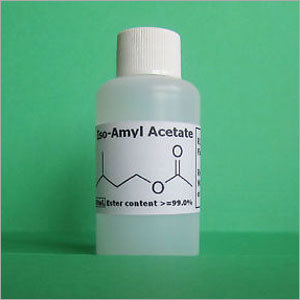
Tell us about your requirement

Price:
Quantity
Select Unit
- 50
- 100
- 200
- 250
- 500
- 1000+
Additional detail
Mobile number
Email

More Products in Amyl Alcohol's & Acetates Category

n-Amyl Alcohol
Application : Other , Used as a solvent, in organic synthesis, as a flavoring agent, and in the production of esters
Storage : Other, Store in a cool, wellventilated area away from sources of ignition
Usage : Industrial solvent, chemical intermediate, manufacturing flavors and fragrances
Purity : 99%
Grade : Industrial Grade
Physical Form : Liquid
Ethyl Acetate
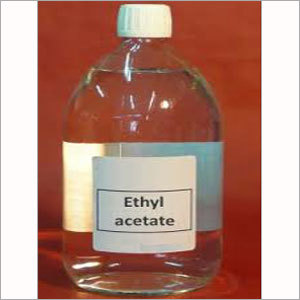
Application : Other , Solvent for paints, coatings, adhesives, inks, extraction processes
Storage : Other, Store in a cool, dry, wellventilated area; keep container tightly closed
Usage : Industrial solvent, extraction, flavoring, pharmaceutical preparations
Purity : 99.8%
Grade : Industrial Grade
Physical Form : Liquid
Propyl Acetate
Application : Other , Used as a solvent in coatings, inks, and fragrances
Storage : Other, Store in tightly closed containers in a cool, dry, wellventilated area
Usage : Industrial applications, manufacturing of paints, inks, coatings, and flavors
Purity : >=99%
Grade : Industrial Grade
Physical Form : Liquid
Butyl Acetate
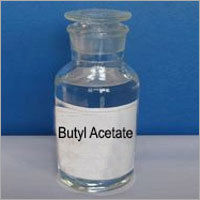
Application : Used as a solvent in paints coatings adhesives and inks, Other
Storage : Other, Store in a cool wellventilated area away from heat and open flame
Usage : Industrial solvent extraction agent diluent in lacquers and enamels
Purity : 99.0%
Grade : Industrial grade
Physical Form : Clear colorless liquid, Other


 Send Inquiry

54, JL & Part of 55 N, Industrial Area, Maxi Road,Ujjain - 456010, Madhya Pradesh, India

Mr. Saurabh Maru
(Partner)
Mobile :07313726422
 Send Inquiry
Developed and Managed by Infocom Network Private Limited.
 English
 Spanish
 French
 German
 Italian
 Chinese (Simplified)
 Japanese
 Korean
 Arabic
 Portuguese